Community Growth
When You Cannot Advertise: What Forbidden Markets Teach About Trust, Demand, and Networks
When public advertising is removed from marketing, the most basic mechanisms remain: need, trust, access, reputation, and human networks.
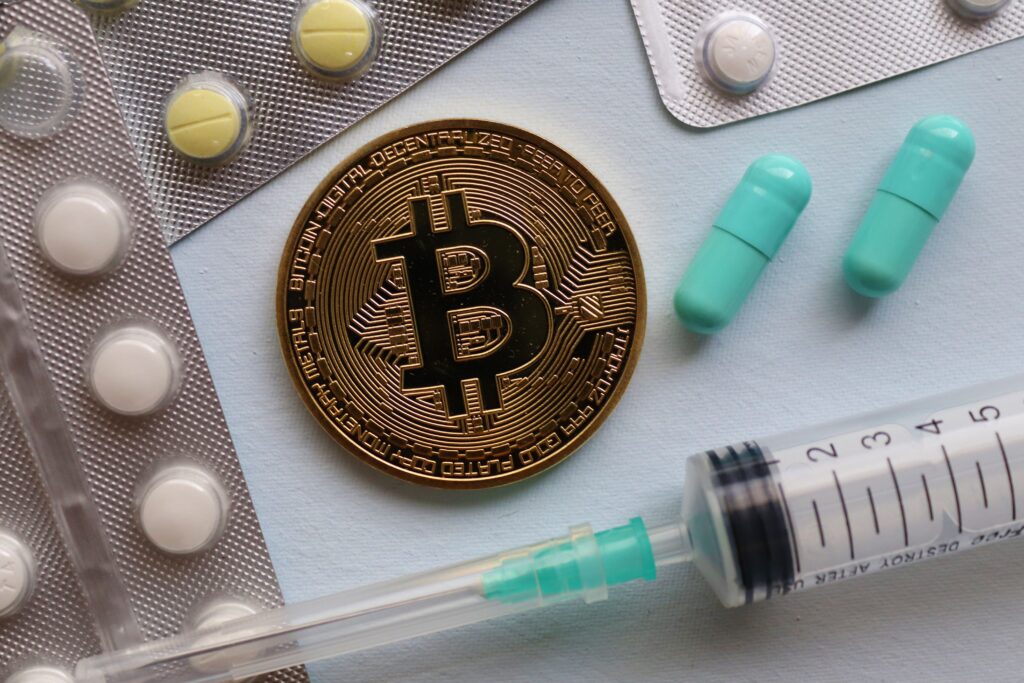
Some markets cannot advertise themselves. They have no billboards, no paid campaigns, no polished landing pages, and sometimes even speaking about them directly has to remain vague. Drug trafficking, illegal gambling, and prohibited services are extreme examples of markets that operate below the radar.
This article is not about how to operate such a market, and it does not try to romanticize secrecy. Quite the opposite. It uses forbidden markets as a critical lens for a broader marketing question: what remains of marketing when public advertising is impossible?
The answer is surprisingly simple. When media, exposure, public branding, and orderly funnels are removed from the table, the most basic marketing mechanisms remain: need, trust, access, reputation, and human networks.
Marketing does not begin with advertising. It begins with need
The first mistake is thinking advertising creates the market. Sometimes it only accelerates it. In forbidden markets, demand exists without an ad. A person does not need to see a banner to know they are looking for something. The need is already there, so the main question is not how attention is created, but how access is created.
This is an important lesson for legitimate businesses too. Not every marketing problem is an exposure problem. Sometimes the need is clear, but the path to the solution does not feel trustworthy, simple, or safe enough.
A brand that thinks only in terms of advertising asks “how do we reach more people?”. A brand that thinks more deeply asks “who already needs us, and why do they still not trust enough to move forward?”.
When you cannot shout, reputation whispers
In visible markets, a brand can buy visibility. In secretive markets, visibility itself can be risky. Reputation therefore moves quietly: through people, familiarity, repeated experience, and recommendations spoken carefully.
Again, this is not a model to copy. It is a principle to understand: when there is no public advertising, trust moves through denser networks. Not “everyone knows”, but “someone I trust knows”.
This happens in fully legitimate markets too. A doctor, consultant, neighborhood restaurant, professional, niche community, or small B2B product can grow not because they shout the loudest, but because someone credible carries them forward.
Weak vs smart: exposure versus access
Weak: “If more people see us, more people will buy”.
Smart: “If the right people get a trustworthy way to understand us, reach us, and hear about us from a source they trust, progress becomes more likely”.
Exposure is only a beginning. Access is already a system. It includes who lets you in, how people know you are real, what makes someone feel safe, and what happens after the first time.
The most interesting marketing is not always where everyone is looking. Sometimes it is in the quiet path where trust moves from person to person.
Risk changes how people choose
In forbidden markets, risk is high, so choice does not behave like a normal purchase. People check differently, hesitate differently, and rely more on reliability signals. The higher the risk, the less public advertising is enough. A person looks for safety, not only a message.
This is also true in legitimate markets where the decision is sensitive: large amounts of money, health, privacy, professional reputation, or a choice that is hard to undo. In such situations, a customer is not looking only for an offer. They are looking for signs that it is safe to trust.
That is why marketing for sensitive products should be less noisy and more reassuring: transparency, evidence, clear boundaries, process explanation, and enough trust signals so the customer does not feel alone in the decision.
What can legitimate businesses learn without copying?
The lesson is not “be secretive”. That is a shallow and dangerous conclusion. The lesson is that marketing does not depend only on advertising. A legitimate business can learn to ask where its trust is actually created: in an ad, a conversation, a recommendation, a community, a repeated experience, or the way one customer tells another.
Sometimes it is better to invest less in increasing noise and more in strengthening transfer. Does a satisfied customer know who to recommend to? Is the value easy to explain to others? Is there a small community that feels ownership over the recommendation? Does the reputation live only on the website, or also in conversations the brand does not control?
The strongest brands are not only the ones everyone has seen. They are the ones enough of the right people are willing to pass forward.
The central question: what remains when there is no stage?
When there is no public stage, no campaign, and no broad exposure, marketing does not disappear. It simply returns to its most basic form: someone needs something, someone else knows how to access it, and trust moves through relationship, memory, and reputation.
This does not make forbidden markets a worthy business model. It only reveals an old marketing truth: advertising is a layer. Trust is infrastructure.
Anyone who understands the difference stops asking only “how do we bring more traffic?” and starts asking a deeper question: how do we build a system people trust enough to pass forward?
Three value points from this article
- Marketing does not begin with advertising: it begins with need, access, and the question of who can be trusted.
- Closed networks reveal dense trust: when public exposure is absent, personal recommendation and reputation become more meaningful.
- Legitimate businesses should not copy secrecy: they should understand how to strengthen trust, word of mouth, and confidence.
Where to go next
- How to build a recommendation system that does not feel forced.
- Why sensitive products need quieter language than impulsive products.
- How a small community can become a stronger growth engine than a broad campaign.
Recommended next read
Continue with It Used to Happen in the Town Square. Today It Happens in a WhatsApp Group: How Community Trust Became a Marketing Engine, because it continues the same question from a clearer legitimate angle: how trust moves between people and becomes marketing power.