Marketing Psychology
Why Does a Brand Need a Face? The Psychology Behind Mascots, Characters, and Humanized Marketing
Brands use characters because it is hard to connect with a corporation, but easy to remember a face, voice, personality, and joke that returns at the right time.
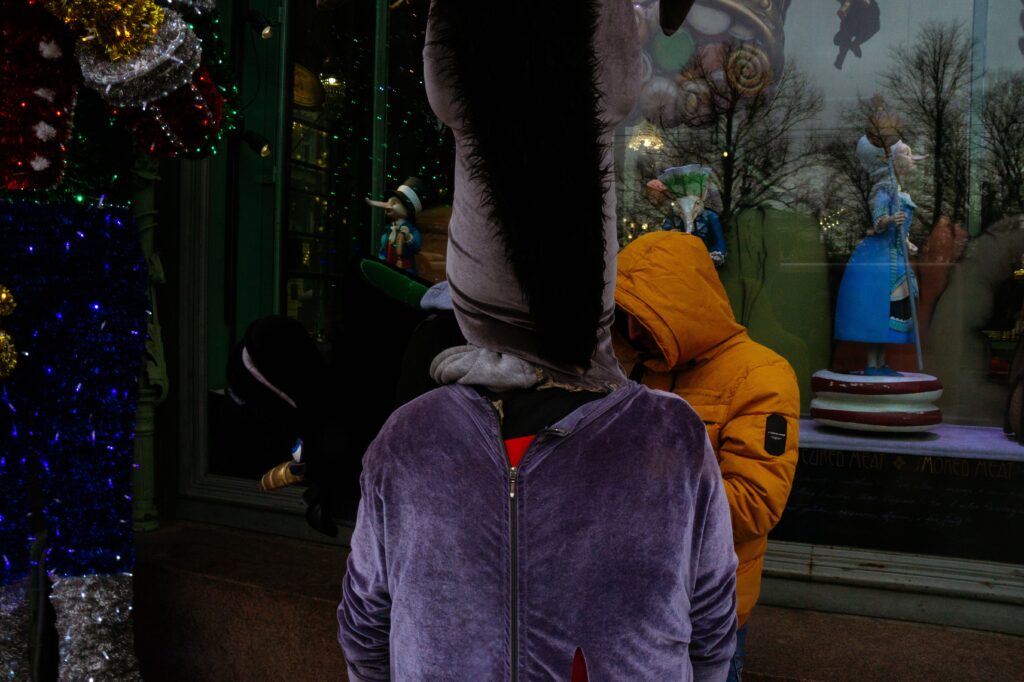
Brands are abstract things. A company, logo, product, promise, service, branch, website, or app. But people are not built to fall in love with an organizational structure. It is much easier to remember a face, voice, habit, joke, movement, or recurring line.
That is why brands invent characters. Sometimes it is an animated animal like Tony the Tiger. Sometimes it is an exaggerated human character in an ad. Sometimes it is a service character, a funny character, an annoying character, or a semi-fictional persona that follows the brand over time.
On the surface, this looks like creative work. Underneath, it is simple psychology: a brand without a face asks us to understand it. A brand with a character gives us someone to remember.
We do not talk to corporations. We talk to characters
It is hard to develop a feeling toward an abstract entity. “Insurance company” or “breakfast cereal brand” are concepts. A character, on the other hand, can be brave, childish, smart, annoying, bold, exaggerated, or calming.
Once a brand has a character, it receives human traits. This phenomenon is called anthropomorphism – the tendency to attribute human characteristics to things that are not human.
In marketing, anthropomorphism can turn a cold product into something easier to relate to. Not because the product changed, but because the way we meet it changed.
A brand mascot is not a drawing. It is a short relationship
A good mascot does not only “look cute”. It returns. It speaks in a consistent language. It creates expectation. It gives the brand behavior that can be recognized even without reading the brief.
Tony the Tiger, for example, is not only a tiger on a cereal box. He is a character that connects the product to energy, children, morning, sportiness, and positivity. The character gives the box a voice.
In other products, the character can do the opposite: not make the brand perfect, but make it more human through a flaw, exaggeration, or awkwardness.
What changed: from the perfect mascot to the quotable character
In the old world, many brand mascots were stable, positive, clean, and recognizable for years. They were designed to create confidence, repetition, and fast identification.
In the social media world, a brand character often needs something more: to be quoted, shared, memed, dressed up, reactive, a little strange, sometimes even slightly uncomfortable. It does not only represent the brand. It creates conversation.
This is the important shift: from a character that appears in an ad to a character the audience can carry forward.
Weak vs smart: a character without a role
Weak: Create a colorful character and assume it will solve a memory problem.
Smart: Understand which psychological role the character plays: does it reassure? Make people laugh? Explain? Make a heavy product lighter? Give children a point of connection? Say out loud what the customer quietly feels?
A character without a role is decoration. A character with a role is an asset.
A character can say what a brand cannot
There are things a brand cannot say without sounding strange. It cannot be too needy, too vulnerable, too funny, or too bold. A character can.
This is one reason strong advertising characters survive beyond a campaign. They allow the brand to hold a voice that would not work if it came directly from the logo.
The character is a translation layer: between a business product and human language.
The risk: when the character swallows the brand
As with every strong tool, there is risk. A character that works too well can become the only thing people remember. They quote it, laugh at it, share it – but do not know what the brand wanted to say.
That is why the question is not only “is the character memorable?”. The question is “does its memorability bring us back to the brand, the product, or the right emotion?”.
A good character does not only steal the show. It holds the show for the brand.
Why does this matter now?
In an era where people skip ads, scan feeds, and receive recommendations through algorithms and intelligent agents, a brand needs more than a graphic symbol. It needs behavior that can be recognized.
A brand character can be one way to create that behavior: a consistent voice, recurring moments, shareable language, and emotional memory that does not depend only on the product.
The central sentence is simple: sometimes the best way to make a product memorable is not to explain it more, but to give it someone to be.
Three value points from this article
- A brand character is not decoration: it can turn an abstract product into a short relationship that is easier to remember.
- Anthropomorphism builds an emotional bridge: people relate more easily to voice, personality, and a face than to an abstract corporation.
- The character must serve an idea: if it is memorable but does not lead back to the brand, it becomes independent entertainment.
Where to go next
- How a brand character can turn from an advertising asset into a community asset.
- Why a flawed character can be more memorable than a perfect one.
- How AI agents may become the new brand characters.
Recommended next read
Continue with People Do Not Just Buy a Product – They Buy Confidence in the Decision, because it expands the question from a deeper angle: how a brand creates confidence around a choice, not only around a message.